
The Thin Organization, Part II: Trapped into Causal Opacity?

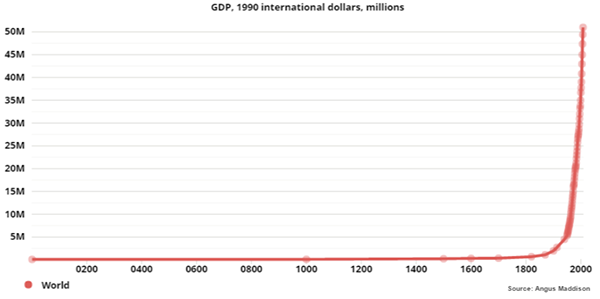
causal_opacityOur world is changing. Fast. Radically. To cope with this pace of evolution, or to simply avoid disruption, organizations must evolve. The Glorious Thirties, these years which embodied the Golden Age of mass production and standardized consumption, are definitely behind us, and let place to what Nilofer Merchant calls the Social Era, an age both of hyper connectivity and extreme individuality, characterized by versatility of markets and uncertainty of consumers’ behaviors. In this context, evolution is no more a choice.

In reality, evolution has always taken place, within and outside of organizations. Yet, many attempts to drive it have ended up in dead-ends. Innovative organizational principles, such as Lean or the Total Quality Management system, were led astray from their original customer-centricity (doing better to better serve customers) to enforce the bureaucratic and mechanized shortcomings of Taylorist organizations. Why?

One of our biggest mistake might have been to consider the three main poles of this evolution, people, technology and organizations, as separate factors linked by causal chains. We claimed, and believed, that novel technology would change business, which in turn would change customers, by creating more demand. Or, similarly, that new business principles would change workers’ performance, for which we will need new technology to better manage this performance. And so on. But what works in a mechanistic realm doesn’t apply in a complex world. Causes and consequences are blurred, and evolution is the result of many non-linear interdependencies which cannot be insulated. Transforming a term of the equation doesn’t ensure the propagation of this change to other components, and many organizational innovations fell short from their expected results, being trapped in causal opacity. At the light of complexity, transformation is co-evolution, which happens through the connections existing between the systems. The Taylorist organization failed and rendered itself unable to evolve, not by lack of will, but because it lost contact with employees’ creativity and customers’ expectations. Companies need to reconnect with their customers, circling back to the definition Peter Drucker gave of business: “There is only one valid definition of a business purpose: to create a customer.”

Sadly, it often seems like we don’t learn from the past. Enterprise 2.0 was primarily defined as business transformation through the use of technology. “Social” is for IBM “changing the way people connect and the way organizations succeed”, while Oracle claims that social media transforms businesses and the way they interact with customers. The present credo in «social enables the change» looks so much like another causal illusion. In a coevolutionary world, change is driven by influence, and by companies’ fitness to the global ecosystem. In other words, companies should focus on their own, intrinsic transformation to cope with today’s global mutation of business. As Ghandi once said: “If we could change ourselves, the tendencies in the world would also change.”

Posted in As seen, heard or read, English
Tagged , , , , , , , ,
Leave a comment

The Thin Organization Part I: Enacting Social Business

enacting-social-businessI was recently invited to participate to a session during the Enterprise 2.0 Summit in Paris, along with Jon Husband and Richard Collin, on the theme of “frameworks for the networked organization”. I won’t give here my thoughts about the Summit, as you can already find some insightful articles around the web, but will instead try to explore and develop further the ideas from my short talk.


A matter of terminology

Transforming organizations starts with transforming the language used to describe them. While we used many terms borrowed (with more or less precision and relevance) from the military realm: command-and-control, operations, reporting, campaigns, targets… to describe organizations in the Industrial Age, the social business jargon has a strong technological flavor, “framework” being a typical example. Despite a shared emphasis on the cultural and human dimensions of the change at stake, technology vendors and analysts have a strong hold on “social in enterprise”, this explaining that.

Yet, as Karl Weick and others have strongly evidenced, organizations are built up and maintained through language, through enactment. It is thus quite paradoxical to notice that we keep on using and abusing this terminology, while even the most technology inclined agree on the fact that technology is only a, not even major, part of the equation. Can we then seriously herald the need for organizations to empower their workforce, while at the same time our language enforces the idea that technology will drive the shift, in the same way it drove the change toward automatization?

At a deeper level, this paradox is in reality a Gordian Knot, and as so must be cut through in order to be untied. In our uncertain and fast-moving environment, our understanding of organizations has to shift from a Newtonian view, in which we see them as productive machines, to a Darwinian one, and consider them as ever evolving complex adaptive systems. Under this angle, the very idea of frameworks is definitely irrelevant, as no framework will ever be able to anticipate, or even summarize, the evolution of a complex system. Complexity obliges us to think differently; one of the remarkable properties of CASs is that, to be able to predict their evolution further than discrete and for a very short term (think about the inaccuracy of long-term weather prediction, for example), one has to precisely know the initial state and value of EVERY variable involved. A small imprecision in evaluating a single variable might lead to a huge divergence in the evolution of the system. In that sense, each organization is unique, and will become “social” in its own, unique and unpredictable, way, without regard to technology or methodology used to seed and accompany the change.

Social business as a purpose

Being unable to predict, and rationalize, evolution, doesn’t mean we are not able to foresee global trends of change. In fact, most of these changes have already begun to unfold under our eyes, beginning from the rise of the Industrial Revolution, without us formally noticing. What I can witness, and deduce from observations and experience, is a slow but steady evolution toward a new organizational paradigm and purpose. This evolution, which is now accelerating in a quasi exponential way with the help of technology available, will lead to what I might call true social business.

As a term, “social business” embeds much ambiguity, thus is largely subject to controversy. Terminology mist, again. It encompasses both the definition given by Peter Kim and Dion Hinchcliffe in their book Social Business by Design, of businesses internally and externally empowered by the use of social technologies, and the one from Muhammad Yunus, which has itself a dual meaning; the one of non-profit organizations acting for social good, and the one of profit organizations owned by the poor for their own benefit.

In the future, successful organizations will, to some extent, embody both significations, to be able to keep on satisfying customers who are also employees somewhere. This evolution toward what I call the thin organization, the rediscovery of a purpose for which profit is a mean and not an end, in line with what Henry Ford stated in 1903: “A business that makes nothing but money is a poor business”, I will develop in the next parts of this post.

Posted in As experimented, As seen, heard or read, English
Tagged , , , , , ,
Leave a comment

Learning and the KISS Principle

classroomOur educational system is broken. This isn’t breaking news, of course, but what strikes me is that, while being more and more aware of the deep changes at work in our life, and of the necessity for the corporate world to adapt to the growing hyper-connected nature of our world, most “social business” discussions circle around ways to enhance operational mechanisms, and tend to ignore the real infrastructure these are built from. Can we really talk about trust, collaboration, or leadership, without considering seriously the social and psychological mold which conditions so many of our behaviors: education?

From Socrates to Black Hussars

Far from all the hype surrounding social and collaborative enterprise technologies, social learning remains contained to a confidential arena. Putting side by side the words “social” and “education” (in the mundane sense of knowledge acquisition) in the context of the workplace means at worst a somehow formal training of collaborative technologies, and at best a community-like layer stuck to a traditional LMS… Are we so much entangled into a fossilized processes and transactions based organizational realm, to have forgotten that education is nothing but a social process with a social purpose?

From Socrates’ elenchus to the theory of cognitive development developed by Jean Piaget, education specialists have acknowledged that most of our learning occurs by interacting with others and challenging our assumptions. Yet, the history of education is made of successive renunciations to this simple, pragmatic as well as theoretical, observation.

When, after the French Revolution of 1789, the public school system began to take shape on both sides of the Atlantic, the willpower to teach common civic values to people freed from the deterministic social hierarchy of the Ancien Régime paradoxically quickly leaded to a rigid schooling system, often described in military terms. For Thomas Jefferson, education was “a crusade against ignorance”; Charles Péguy, in L’Argent, wrote:

“Our young masters were beautiful as black hussars. Slender; austere; strapped in. Serious and slightly shivering with their premature, their sudden omnipotence.”

Paradoxically too, as education focused on the acquisition of social knowledge and behaviors, the way this knowledge was transmitted at school was more and more formal, and left less and less room for interaction and experimentation. The barrier between knower and learned became more and more leakproof. The more education focused on social matters (its purpose), the less it relied on the social aspects of the learning act. With democracy, teaching became training, and in classrooms, purpose smothered the process.

An industrial purpose

During the nineteenth century, another shift occurred. The newborn industry was in growing need of educated people, not in the previous social sense of this, but educated enough to join factories’ workforce. The traditional separation between school, where cultural and moral values were taught, and apprenticeship, which allowed learning practical skills through social interaction, began to blur. From a civic necessity, education became an economical one. The schooling system formalized itself even further, structuring itself into distinct levels to answer the new economical and hierarchical logic. Its main purpose was no more to create an “honnête homme”, but to prepare students to enter the world of work.

So is the narrow-minded vision of education most of us are still experiencing today. While we live in a world where growing uncertainty forces us to constantly adapt and learn, organizations mainly rely on employees’ initial training to fill roles. Then, they still consider training and learning as “feeding” activities, insulated both from work and from the context in which work takes place. Andrew McAfee just posted an article on HBR asking employers to stop requiring college degrees. He is right, but unfortunately not for the good reason. He condemns the high price and ineffectiveness of studies, where the main problem is the lack of relevancy of most initial trainings. Think of all the things that are part of our life and which didn’t exist ten years from now. Think of the 70 percent of time used to handle exceptions in companies. The unique thing formal initial training should focus on is teaching how to learn.

KISS: Keep It Social, Stupid

Beyond an absurd emphasis on initial training, our broken educational system bears responsibility for many misconceptions One of the biggest mistake we are making, when discussing the new nature of work, is to think of learning as a collective activity. But learning is not collaboration. We learn from each other, but not together. If knowledge has no value without being shared, it is of little value without being internalized within our own context. Collaboration by itself has few chances to lead the claimed transformation.

Another mistake is our present belief in an engaged workforce. For the last 150 years or so, education has been about dehumanizing individuals to fit a mechanistic system, to conform to a business environment dominated by risk avoidance, predictability and standardization. In this context, restoring trust, nurturing a climate of empathy and autonomy, will require much more than incentives and gamification. To push people out of a comfort zone that formal education built around them for many years, leaders and trainers will need to restore social into learning, not only in the knowledge transmission process, but in its core purpose. As the frontier between work and private activities blurs, it might not be absurd to think that organizations have an active role to play in education. As Emile Durkheim stated, in Education and Sociology:

“Far from having for unique or main subject the individual and his interests, it is above all the way used by the society to constantly renew the conditions of its own existence.”

To transform the way we work, we also (and maybe first) need to transform the way education is driven. By putting it back at the center of human activities, at the center of work, et by restoring its primary process and purpose, we will make a giant step in the right direction of organizational transformation. Learning? It is up to a real social business to Keep It Social, Stupid.

Posted in As experimented, As seen, heard or read, English
Tagged , , , , ,
Leave a comment

My Social Business Predictions for 2003 (not a typo) – Part 2

future-of-businessMost of today’s organizations are powerful productive machines, which were founded and grew up during an era where mass production was the norm, and planning was the course of action. This era is over for good, and social business, or enterprise 2.0, or connected company, or whatever you want to call it (the level at which most people from this field do not want to be tagged with a specific term is amazing) aims at building and providing an actionable business framework for our times ridden with complexity.

To survive in a more and more unpredictable environment, to thrive in economically challenging times, organizations must reinvent themselves at every level. On the internal side, they have to leverage business nimbleness by adopting more modular and networked structures (to become what Dave Gray calls podular companies), and empower the individual creativity and intrapreneurial spirit of their workforce. On the other side, they must learn to deal with versatile, over-informed and hyper-connected customers.

Pushing business-as-usual to new heights

On both sides of organizational boundaries, social technologies offer the mean to connect people in a transparent and purposeful manner, whether it be to accelerate learning and knowledge sharing, to leverage innovation at business level, or to engage with customers to nurture relationships. The benefits of becoming “social” seem obvious enough for anyone to jump in at once. Yet, as Irving Wladawsky-Berger commenting a recent Forrester study, stated:

Companies are making investments in social platforms and technologies, but, in general, their efforts remain haphazard and disjointed. They may succeed within individual silos of the business, but they are not fully realizing the potential power of becoming a social business“.

Even more worrying, while we are heralding a cultural change inside organizations, most of the values and capabilities associated with “social” are diverted from their primary purpose; flattening hierarchies often leads to a tighter command-and-control mindsettelework is a curse as well as a blessingtransparency might instead offer a greater potential for manipulationsocial media, when used for customer care, often appears to be just another inefficient channel.

We may, of course, keep on concentrating on enlightening case studies, on these very few companies which really walk the talk, and show them as examples to the -huge- rest of the business world. But fact is that what we qualify as a success is too often a successful attempt to enforce a harder, better, faster business-as-usual. In the “social” model many celebrate, organizations keep on assuming that people can easily be split into two groups: employees (resources for production) and customers (resources for consumption), and that the relationships which link these two groups are of transactional nature. Engaging customers means more sales, empowering employees means smoother processes. They are looking for the same business, powered by social.

Beyond exception handling

Let us get clear. Organizations do not need to become social because of a need to better engage customers on their own channels, or because of an urgent need to better deal with exception handling in process-based operations, but because of a major societal shift. Not only must they adopt new ways of selling products and services, but they have to consider what and why they sell at the light of the change at work under our eyes.

This change is affecting every aspect of our life: politics, economy, culture… and cannot be resumed to technology and collaboration. As Manuel Castells writes:

“Why now? The answer lies in the simultaneous availability of new, flexible information technologies and a set of historical events, which came together by accident, around the late 1960s, and 1970s. These events include the restructuring of capitalism with its emphasis on deregulation and liberalization; the failed restructuring of statism unable to adapt itself to informationalism; the influence of libertarian ideology arising from the countercultural social movements of the 1960s; and the development of a new media system, enclosing cultural expressions in a global/local, interactive hypertext. All processes, interacting with each other, favoured the adoption of information networks as a most efficient form of organization. Once introduced, and powered by information technology, information networks, through competition, gradually eliminate other organizational forms, rooted in a different social logic.”

In this hyper-connected society, the purpose of businesses is still to create and serve customers, and to create profit from it in order to survive, as asserted Peter Drucker in 1954 in The Practice of Management. But the very notion of what a customer is, wants and needs has drastically changed. To further quote Castells:

“Mass consumption was predicated upon standardized production, stable relationships of production, and a mass culture organized around predictable senders and identifiable sets of values. In a world of networks, self-programmable individuals constantly redefine their life styles and thus their consumption patterns; while generic labour just strives for survival.”

Serving the needs of people whose purpose and behaviors constantly change according to their environment cannot be sustainably achieved any more through structures and mechanisms built for mass consumption. The marketing function is tackling this evidence head on: the Service-Dominant logic, conceptualized by Steve Vargo and Robert Lusch, gives new keys to better understand the relationships between companies and customers. Service design aims at understanding customers job-to-be-done from their point of view, and to shape business propositions accordingly.

Serving customers as a wicked problem

Caring for hyper-connected customers supposes new rules, and new organizational paradigms. Doing business in this context exhibits all the characteristics of a wicked problem: there exists no shared understanding of customers’ needs, selling is more and more a “one-shot” solution with uncertain outcome, and the context of the relationships between a brand and a customer constantly evolves over time. In this new world, old approaches do not work anymore. Organizations must adopt social at a higher level, and embrace a new set of managerial and operational paradigms in order to survive:

  • No boundaries
    In order to understand their customers, companies need to “crawl into their skin and go with them as they go about their day“, as Clay Christensen says. This only can be achieved if customers are taken for what they are: active stakeholders of the organizations they interact with. Thus, organizations should move their whole gravity center out of traditional boundaries to where transactions really happen: in the middle of the civil society, and get involved in all the dimensions of this society. Commercial exchanges are no more only consumption activities; they originate in deep personal as well as collective experiences in which every stakeholder takes part.
  • Trusted exchanges
    When customers constantly redefine their behaviors, trusted relationships become crucial, and should influence how business is done, allowing companies to react and reshape their value proposition accordingly. Customer-centricity is still mostly viewed today as an inside-out attitude, and is considered as long as it doesn’t challenge the way businesses operate. Yet, real customer-centricity must go beyond empathy, and become trusted exchanges, symbolic as well as material, between equally weighted partners.
  • A culture of experimentation
    Developing trusted exchanges goes on pair with the will to share, not only knowledge, but also feelings and emotions, and to be able to learn from experience. Learning is a continuous, albeit non linear, process, which can only be leveraged in an environment where experimentation and some level of oddity take place.
  • Emergent and adaptive structures
    More than 80% of people now live in urban areas, and 75% of economical activities of the countries where the industrial revolution took place are services. In this context, the Taylorist structure of work that prevailed in the industrial era do not need to apply anymore. By embracing more emergent, network-based, structures, by focusing on innovation and adaptive leadership, organizations will allow themselves to better deal with the constant and unpredictable changes they are facing today. Tapping into networks’ power means more than giving them a purpose to follow, it means allowing them to follow their own purpose.

The future has already arrived. It’s just not evenly distributed yet“ supposedly said William Gibson. Let us just make sure that today’s organizations get armed to operate in today’s world, not in an era bygone for good. Let us just be sure they really understand what is at stake in becoming social.

This post first appeared on collaborativeinnovation.org

Read part one.

Posted in As seen, heard or read, English
Tagged , , , , , , ,
Leave a comment

My Social Business Predictions for 2003 (not a typo) – Part 1

assembly_lineI know, we are now in 2013, and announcing anything for a past date falls short from being a prediction. But as we are struggling to help organizations transform to adapt to uncertainty, I often find myself thinking that we already did that and went there before, when considering where social business is heading to. Whether on the technological or on the conceptual side, much buzz is made which takes us back from the future. There are many reasons for that, the simplest one being the necessity to survive in present industrial logic while setting the basis to allow businesses to thrive in a wirearchy. New technologies and emergent behaviors must make their way into our dominant top-down, production-based, model before being able to give birth to a model well-suited to complexity and to a knowledge-based era. Yet, most of the trends which shape the social business landscape seem to pull us back into a “déjà vu” draped in new clothes, like a jay dressed in peacock feather. Predicting sometimes looks like diving deeper into a dull past… This article will deal with the technological aspect of this shilly-shallying, while I will consider the conceptual side in another post.

As I began collecting ideas for this post, Bertrand Duperrin published an interesting article, in which he classifies the main approaches taken by vendors to reconcile emergent social technologies with post-industrial business applications and environment: they either chose to “socialize business tools or bring business back in social networks”. In both cases, integration is the name of the (new) game, a game which promises to “unlock creativity everywhere” (IBM Connections), or to “continuously meet both business execution objectives and to delight the end customer” (SAP Jam).

In the midst of this marketing brilliance stands the key purpose of workplace collaboration: enabling better and faster problem solving, by facilitating access to knowledge, resources and expertise throughout organizations and beyond their boundaries, in order to foster better decision making.

The rise of the virtual assembly line

By making an activity stream the backbone of how work is done, whether in business applications or through personal interactions, “social” is tying us to a single place. Of course, the purpose of these activity streams isn’t to have us stare at a screen all day long, as a key success factor of this approach is to teach people how to dig what is important to them and to filter out non important information. Yet the fact remains: actionable activity streams bind people online in a single, unified environment. We are somehow inventing the virtual assembly line, neglecting the necessity for diversity and heterogeneous environments to support the divergent thinking needed when making complex decisions and that a certain level of distraction leverage creativity.

In On Organizational Becoming: Rethinking Organizational Change, Haridimos Tsoukas and Robert Chia have shown that, even without being fully conscious of it, organizations are constantly transforming themselves. One of the major changes we witnessed in the last decade is the restoration of the task-orientation of the way we organize time, orientation that prevailed in traditional societies and linked all personal activities together, and which was replaced by a clock-time orientation during the industrial revolution, as Lewis Mumford noted in 1934. This change alone has deep repercussions on our life, as work can no longer be considered as a “special” occupation disconnected from the rest of our activities.

In this context, the convergence of enterprise social technologies with services available on the public web and their associated behaviors is logical and inevitable. Activity streams wouldn’t have taken off with such strength without Twitter, and Wikis excepted, most of the tools composing enterprise social platforms first appeared on the consumer web. Yet, it seems vendors are looking back to the future… As we just begin to successfully convince executives that social tools aren’t just “Facebook for the enterprise”, focusing on actionable activity streams, and putting all tasks at reach from inside a unified environment, spring sadly from the same paradigm: Facebook again, the sticky place where everything is supposed to happen and which you never quit. People do not live in Facebook, why should they work like they did?

Consumers’ web and behaviors draw a very different picture of emergent technology usage than the one of a global activity timeline. In a recent study, Google has discovered that more than 90% of internet users are multi-screening, either sequentially or simultaneously, on a daily basis. Similarly, a research from Microsoft showed that mobile users (excluding iPhone users) use an average of 10 different applications on their smartphone. As Larry Hawes noted, on a comment to a recent post from Sameer Patel, “Another big facilitator of the change you are advocating for is mobile. Why? Because it gives us a clean slate from both technology and behavioral perspectives. We can use that blank canvas to design computing experiences that allow us to seamlessly combine the transactional, communication and collaboration aspects of work”. In that sense, global activity streams are artifacts from an industrial past. What we need is true interoperability and diversity, not homogeneity and integration. We need to be able to work on different devices, chosen according to the context and our own mood, devices populated with straightforward apps which will not carry more information than we need at the time, while allowing us to bridge this information across time, space and context as needed. These apps won’t be a responsive replication of full-fledged integrated platforms, but their functionalities and design instead will fully fit the behaviors associated with the device that will embark them.

The future in past tense

Departing from the activity stream paradigm, some vendors, historically involved in business applications, like Salesforce or more recently SAP, have chosen the other way around, and aim at introducing collaboration around business objects. Discussing about a document right where he lives, or seeking for help inside a community to solve a customer problem, are powerful and promising cases for collaboration. Yet, the applications and processes around which conversation happens were designed for the industrial age, and collaboration in such a context is somehow like giving a crutch to a paralyzed man. Moreover, as uncertainty and complexity urge us to reinvent most of our assumptions about business, from leadership to business models, collaboration is too important to be left to business as it exists today, to paraphrase Clemenceau.

In fact, the future of collaboration exists, our customers and employees are already taking fully advantage of it in their daily life. It is time for enterprise technology to embrace it to enhance business efficiency in new work models, not to enhance workers efficiency in outdated business models. Let the past rest in peace.

This post first appeared on collaborativeinnovation.org

Read part two.

Posted in As seen, heard or read, English
Tagged , , , , , , , , ,
Leave a comment

The tainted narrative of the workplace

workplace-narrativeTechnology is influencing more than the way we work, it also deeply changes the notion of workplace. As IBM wrote in 2011 in its The new workplace: are you ready? white paper:

“Today’s workplace is a virtual and/or physical environment, characterized by connections, collaboration and user choice, that enables the worker to be more agile and perform activities anywhere, anytime -ultimately creating greater enterprise value”.

Collaboration, as mediated by social software, is on the agenda of every CEO, or should at least be. A widening array of synchronous and asynchronous communication tools, available on almost any device you might think of, allows workers to access resources and knowledge wherever they are, eliminating the necessity to maintain a unified physical workspace. Technology itself is becoming nomad, ubiquitous, pervasive and affordable, in other words consumerized. Even further, the fast growing trend toward BYOD implies a deep interweaving of technology with most of our most mundane social behaviors. Yet, business as usual is still the rule, and most companies seem to be impervious to the changes which are transforming our everyday life.

Walking the talk… Yes, but which talk?

Today’s process based, widely automated and overly bureaucratic organizations are the result of an evolution which began during nineteenth century’s industrial revolution. But this didn’t come by itself. They were shaped that way by enactment, through the discourse and actions of generations of C-level executives, through the theories and principles taught for decades in business schools, with the help of major consulting firms, deeply engraining the Taylorist idea of the firm as a machine, in which people are less considered as resources than as an adjustment variable of costs. How work is really done, the realm of grey processes and human ad hoc collaboration, has progressively been buried under a conceptual view of how work should be done.

What we are in fact witnessing today is the progressive substitution of this narrative by another, heralding a social enterprise enabled by technology. But has the notion of a diffuse workplace a firmer grasp on reality? In an article provocatively entitled ‘I could be dead for two weeks and my boss would never know’: The rhetoric and reality of flexible work, Dr. Andrea Whittle has shown how teleworking can be different from the discourse held by technology vendors. Isolation, difficulties to balance private and professional life, lack of true collaboration, are realities experienced by most workers. But, just like the reality of work in the “traditional” corporate world, the reality behind the distributed workspace is hidden, deleted from the dominant discourse. Today’s technology vendors have replaced yesterday’s strategy consultancies in building the narrative of the workplace.

From connections to nodes

Virtual team collaboration is a central element of this new discourse. Socialcast, for example, promises “A better way to collaborate” as follows:

“Improve teamwork through the power of enterprise social networking. You can also safely include trusted partners, customers and vendors. With Socialcast share information, assign tasks, and collaborate on documents, keeping all members of the team in synch.”

Similarly, for Jive:

“Business depends on teamwork. But traditional tools hamper as much as help, resulting in wasted time, duplicated efforts and missed opportunities. Hours get swallowed up by email and unproductive meetings. Great ideas are lost in inboxes and siloed enterprise software. Essential information is drowned out by noise. It doesn’t have to be that way.”

The focus on teamwork isn’t a new one. It is, in fact, the workplace implementation of the theories of Elton Mayo, an industrial sociologist, formulated in 1933, according to which group belonging increases a worker’s performance, and it is quite paradoxical to see that one of the key arguments of social technology vendors is a concept which gained acceptance and importance in the Taylorist model of organizations.

True collaborative networks do not rely so much on teams than on individuals, as B. Nardi, S. Whittaker and H. Schwartz have shown. The main benefits for networked organizations do not lie in the outcome from teams, but in individual knowledge acquisition, in the ability to connect with the right people and to access the right information at the right time. Instead of focusing on teams and communities, we must concentrate our efforts in providing workers with the right resources and knowledge to build their own connections. The basic unit of social business technbology is personal knowledge management, not collaborative workspaces.

A recent study has demonstrated that “the more teleworkers communicate with their colleagues and manager using email, instant messenger, videoconferencing, and face-to-face communication, the more they feel stressed due to interruptions”. In the virtual workspace, the high level of interactive communication associated with teamwork reveals itself counterproductive and source of stress. Furthermore, the common obsession with maintaining connections through communication leads to less attachment to their organization. Networks are made of connections, of course, but they are ultimately made of nodes, and these nodes are people. As the last IBM’s Global CEO Study, Leading through connections, puts it:

“By empowering employees to act on their own ideas, CEOs are building employee accountability, initiative and loyalty. And by equipping employees to work in an open environment, they are arming the people who represent their brands to the world.”

But instead of supporting individual workers, organizations, as Nardi, Whittaker and Schwartz have shown, are in fact putting responsibility of the extra work required for virtual workplaces to work seamlessly on them, and hide the reality of this work in the emergent narrative of the workplace. Shifting from bureaucracy to networkracy will require each worker to be allowed to tell his own story of how business is done. Rather than emphasizing on the cultural change needed for organizations to become social businesses, we should focus on unleashing and supporting in the workplace the change which is already happening there as well as in our personal lives, and on redesigning organizations around it.

This post first appeared on collaborativeinnovation.org

Posted in As experimented, As seen, heard or read, English
Tagged , , , , , , , , , ,
2 Comments

Innovation, Complexity and Social Business – Part 2

Reconciling Organizational Improvement and Reinvention Through Social Business Design

This post is the second of a two-parts article on innovation and social business co-written with Ralph-Christian Ohr (@ralph_ohr).

A striking change of focus in the social business arena occurred during the last five years. Despite the fact that Andrew McAfee’s original definition specified its scope as «within companies, or between companies and their partners or customers», infant Enterprise 2.0 was mainly concerned by internal collaboration. The teaser from one of the major events of this early period, the Boston 2007 Enterprise 2.0 Conference, talked about “(…) the technologies and business practices that liberate the workforce from the constraints of legacy communication and productivity tools like email“.

This somehow navel-gazing vision of firms, obsessed by internal processes and employees’ performance, has shifted toward a customer-centric attitude. Apart from acknowledging that organizations more and more see the benefits, if not the imperative, to operate as connected ecosystems, including partners, suppliers, customers, and even competitors, in their value creation mechanisms, this profound change mirrors the evolution of our understanding of the way business is done in our hyper-connected era. Yet, putting such a strong emphasis on customers, on their needs and expectations, is at risk of obscuring the role played by other stakeholders. Creating, and sustaining, customers requires more than broadening our traditional array of interaction channels. It requires more than engagement, more than co-creating products and services with them. As developed in the first part of this post, businesses need to develop the ability to reinvent themselves. In order to be able to address unmet and changing customers’ needs, they are required to adjust value creation through new business models.

On the external facing side, social business is proving day after day its relevance in better meeting the new challenges of marketing. On the internal side, beyond present focus on collaborative project management and observable work, it provides an appealing and natural framework to support the flip side of the coin of organizational core functions: innovation.

The marketing view: visualizing and reducing the dynamic tension

Business, social or not, is all about creating, delivering and capturing value, or, in short, about a business model. In “The Business Model Innovation Factory“, Saul Kaplan perfectly summarizes how these points articulate themselves together:

Business models are designed to create value for a customer or end-user.

(…) One of my favorite ways to describe how a business model creates value is by first answering the question, what is the job the customer is hiring your company, product, or service, to do?

(…) An operating model depicts core capabilities necessary to deliver value and how they are linked to each other. It enables a shared story of how an organization works together across functions and with its partners to deliver value.

(…) A business model story describes who pays and how much for value delivered. It outlines a profit formula for the business based on the required operating cost structure in relation to revenue as well as the capital requirements to finance both fixed assets a working capital to support ongoing operations and growth.”

In other words, value is co-created by enterprise and its customers, in the sense that “Value co-creation is bringing in your own contextual resource to achieve the beneficial outcomes with the firm at the point of consumption/experience (remember, we are still talking about value-in-use?)”

In our hyper-connected world, where customers are interacting, trying to find the best solution to fulfill their job-to-be-done, the search for value (their search, as well as the one from companies) creates a dynamic tension between both parts, as motivations between them and companies profoundly differ. Visualizing and reducing this tension requires new skills and capabilities. As Irving Wladawsky-Berger writes: “Customer value is different.  This requires a complementary set of management competencies, much softer or people-oriented in nature, including a focus on human capital, strategy, decision making, innovation and social skills.” This also requires a new operational and managerial model, focusing on engagement with customers, listening, real-time interaction, and fast sense-and-respond loops. Fundamentally, this requires to organize, behave and operate as a social business.

Dion Hinchcliffe recently drew (conceptually as well as literally, and his drawings are always impressive) a map of the Operations of a Social Business. The only flaw we can see in this map is the point of view he drew it from: the engagement level. Bringing social business to strategic level doesn’t require C-level adhesion to the necessity of engagement or to the benefits of co-production of products and services, but maybe simply changing the lens of our vision: the primary benefit from a social business is to allow companies to dynamically adjust their value proposition to customers’ needs and expectations. To put it simply, social business is a perfect fit for present business models improvement.

The innovation view: leveraging new business skills

As important as improving an existing business model can be, the real challenge, and opportunity, for organizations lies in their ability to explore and develop new business models, as we exposed in the first part of this post. In a follow-up to its Global CEO Study 2008, entitled “Seizing the Advantage“, IBM has identified three key characteristics demonstrated by successful business model innovators: they are all Aligned, Analytical and Adaptable.


By becoming social, organizations will acquire the necessary structure and capabilities to be able to maximize each of the “Three A’s”:

  • Aligned – Leverage core capabilities and enforce consistency across all dimensions of the business model, both internally and externally, that build customer value.

As said above, one of the key consequences of becoming social is allowing proper adaptive alignment between customers’ needs and organizations’ value proposition, and facilitates the exploration of novel propositions and business model hypotheses.

  • Adaptable – Link innovative leadership with the ability to effect change and create operating model flexibility. Outperforming innovators are capable of and willing to pursue new opportunities while maintaining focus on sustaining current business -often referred to as ambidextry.

There is quite a consensus on the role leaders should play in a collaborative enterprise. They should work at empowering their employees and at giving them enough autonomy and support, what Vineet Nayar, vice chairman and CEO of HCL Technologies Ltd and author of “Employees First, Customers Second”, resumed it as “CEOs, Get Out of the Way!”. But as seducing as this anthem sounds, it only works where no business model innovation is required, or at least where minor tweaks suffice, letting line managers adjusting according to internal/external interactions. A better role for leaders is the one of “business architect” (and we suspect Mr Nayar in reality to assume this role), dynamically orchestrating the required sets of resources. As Stephan H. Haeckel wrote:

” Designing a business as an adaptive system of roles and accountabilities makes it possible to change business models much more rapidly. Those parts of an enterprise that can and should be designed for efficiency can be dispatched as easily as can the capabilities designed for adaptiveness. This is because roles are linked in terms of outcomes, not in terms of the way in which the outcomes are achieved. How a given role should be designed depends on the degree of predictability in the requests made of it and is a decision to be made by the accountable individual occupying that role. Because a business architect need not specify how things are to be done, he or she can incorporate roles that vary widely in terms of their internal processes and even management systems. This feature makes the incorporation of external capabilities a natural part of any business design.”

  • Analytical – Use information strategically to create foresight, and prioritize actions while measuring and tracking for rapid course correction.

In Harold Jarche‘s words: “in trusted networks, openness enables transparency, which in turn fosters a diversity of ideas. Supporting the creation of social networks can increase knowledge-sharing which can lead to more innovation, especially in networks built on trust.” Knowledge sharing, capture of tacit knowledge, recombination of existing knowledge to create new patterns, are at the core of social collaboration. A study conducted in 2011 by Institute for the Future for Apollo Research Institute identified ten critical work skills needed in the next ten years. Among them, sense-making (described as “ability to determine the deeper meaning or significance of what is being expressed”), computational thinking (the “ability to translate vast amounts of data into abstract concepts and to understand data-based reasoning”) and cognitive load management (the “ability to discriminate and filter information for importance, and to understand how to maximize cognitive functioning using a variety of tools and techniques”) directly deal with analytical capabilities in a networked organization.

The systemic view: a structural framework for business model innovation

Set alone, these “Three A’s” are necessary, but not sufficient characteristics to drive successful outcomes. As we outlined, business model innovation requires embracing emergent strategies while following an adaptive path to keep on adjusting present models, all of which equating to dealing with a wicked problem.

In “What’s the problem? An Introduction to Problem Structuring Methods“, Jonathan Rosenhead has exposed some principles to be applied when tackling wicked problems, principles which were summarized by Tom Ritchey as follows:

  • Accommodate multiple alternative perspectives rather than prescribe single solutions
  • Function through group interaction and iteration rather than back office calculations
  • Generate ownership of the problem formulation through transparency
  • Facilitate a graphical (visual) representation for the systematic, group exploration of a 
solution space
  • Focus on relationships between discrete alternatives rather than continuous variables
  • Concentrate on possibility rather than probability

A culture of diversitytransparency through narration of work, and complex interaction throughout an organization’s ecosystem are core characteristics of a social business. By reconciling the marketing with the innovation view of the collaborative enterprise, organizations will arm themselves with all the capabilities needed to increase value co-creation. By organizing for flexibility, subsidiarity and connectedness, they will become able to internally orchestrate these capabilities in order to reinvented themselves as needed. As Dave Gray stated: “Design for connection is design for companies that are made out of people. It’s design for complexity, for productivity, and for longevity.”

As highlighted in IBM’s study (see diagram below), organizations must combine organizational improvement (exploitation of existing business model) and reinvention (exploration of new business models) to adapt to different paces of change in their environment. To do so, they have to integrate and balance the marketing and the innovation views in a more systemic and emergent approach to corporate strategy.


Social businesses are designed for business model innovation. They are Moneygram online complex adaptive systems designed for auto-(re)organization and resilience, and form a structural framework for innovation, at all levels. But they are only part of the story. To gain real business model agility, organizations must cultivate a culture of experimentation, favoring decision-making through fast prototyping and testing. Present, and next generation technology focuses on the marketing view: Social CRM, Adaptive Case Management and big data analytical tools are about to complete the set of social technologies available today. Tomorrow’s breakthrough enterprise-grade technologies might well be complex decision-making support tools, and Problem Structuring Methods implementation, to help organizations in better tackling the wicked problem of business model innovation and reinvention.

Read first part.

Posted in As seen, heard or read, English
Tagged , , , , , , , ,
2 Comments

Innovation, Complexity and Social Business – Part 1

Business Model Innovation as Wicked Problem

This post is the first of a two-parts article on innovation and social business co-written with Ralph-Christian Ohr (@ralph_ohr) and cross-posted from collaborativeinnovation.org.

We live in an age where emergent technologies continue to have massive effects on business and society. Rising complexity requires companies and economies to cope with increasingly interlocking systems. If we keep on considering systems in a traditional, isolated way, this would lead to a totally locked view of business. This new hyper-connected nature of information entails an unprecedented change in business and societal environments. One major consequence for companies is the imperative to learn to anticipate those changes as well as to successfully adapt to them, or being at risk of disappearing.

The business model is the new unit of design

The life time of business models is declining. Organizations are forced to reinvent themselves more and more frequently in order to survive and thrive. This implicates the creation and pursuit of new businesses while maintaining and improving existing businesses – sustainable success depends on a proper integration of evolutionary and revolutionary innovation.

A recent Arthur D. Little study has found that the proportion of innovative new products in adjacent and new business areas is likely to be nearly 3x as big as it was in the last decade (figure below). Such an increase would have fundamental consequences for the way innovation is managed. These radical innovations typically entail the search of new business models and strategies in order to scale them.

Source : http://www.adl.com/uploads/tx_extprism/Prism_01-11_Innovation_Management_01.pdf

Furthermore, the latest IBM 2012 Global CEO Study, titled “Leading Through Connections“, indicates that there is no significant difference in their approaches to product and service innovation when comparing  outperformers with underperformers . Where they differ is in their approach to business model innovation. Outperformers tend to upset entire industries. According to the following figure, they are 48% more likely to break into other industries and twice as inclined to invent entirely new ones. Tom Hulme from IDEO puts it in a nutshell: The business model is the new unit of design.

Source: http://public.dhe.ibm.com/common/ssi/ecm/en/gbe03485usen/GBE03485USEN.PDF

The rise of co-creation

Confronted with growing complexity at every turn, organizations are finding it increasingly impossible to be successful when entirely executing on their own. In order to move along innovation s-curves more effectively and efficiently they aim at building appropriate open value networks. Another finding of the IBM Study confirms outperformers to be more inclined to innovate with external partners (figure below). There seems to be a clear tendency to leverage openness, connectedness and collaborative innovation for the successful creation of novel business models. Obviously, cocreation with partners, who may even be competitors, gives outperformers the edge to tackle the most challenging forms of innovation. (Re-) Combination of internal and external capabilities to create value across boundaries is becoming crucial for organizations to succeed.

Source: http://public.dhe.ibm.com/common/ssi/ecm/en/gbe03485usen/GBE03485USEN.PDF

Indeed, S. D. Shibulal, CEO and Managing Director Infosys Limited, claims co-creation to be “the future of innovation“:

Our research and experience clearly indicates that the success of tomorrow’s enterprises will be strongly linked to the inclusiveness of their strategic ecosystem – an ecosystem which drives innovation through active co-creation with key stakeholders. At a time when businesses are struggling to adapt to complex market realities or to become more efficient or to develop a competitive differentiator or to simply survive, those who converge their innovation strengths are likely to have the edge. (…)

Finally, co-creation also expands the canvas of creativity, such that organisations need not restrict their innovation endeavors to those core competencies they already have a proven track record in. If they lack the expertise to plumb the depths of a certain arena, they can “acquire” it by simply co-building such expertise and insight with the right organisations. It’s a win-win situation. To conclude we believe that co-creating products, services and solutions that cater to specific needs of the stakeholders is the only way we can build our enterprises of tomorrow.

Embracing emergent strategies

As previously outlined, organizational reinvention by entering new businesses requires a different approach than sustaining existing businesses. Unlike exploitation of existing business models, exploration of new business models follows an emergent strategy through iterative testing, adjustment and validation. In most cases both customer problem (job-to-be-done) and solution (viable and feasible business model) are yet unknown at the outset. Therefore, matching them entails an open-ended search process without predefined goals.

Due to interactions and interdependencies among diverse stakeholders with different values and perspectives (such as customers, R&D, finance, management, shareholders, suppliers, sponsors etc.), this process of creating and implementing a novel business model while maintaining the existing model exhibits features of a wicked problem. Wicked problems are the opposite of complicated -but ordinary- problems that can be solved in a defined time by applying standard analytical methods. Transitions between different business models can also be regarded as complex adaption processes aimed at responding to fundamental changes in the business environment.

In “Tackling Complexity and Wicked Problems with Design Thinking“ we suggested the following pillars to properly address such complex problems:

  • Experimentation and agility: In complex and uncertain environments it’s essential to let patterns emerge and to determine which ones are convenient. Every experiment exposes new aspects of the problem, leading to further adjustments of the following solution proposal. In place of finding ‘the right solution’, problem understanding and solution must be woven together from beginning to end through explorative iterations.
  • Interpretive approach: A wicked problem usually implies a radical uncertainty, i.e. not simply an inability to predict which of several options will turn out to be the preferred one. In the absence of a specified solution, no analytical problem solving can be applied by breaking the problem up into a set of separable parts that can be assigned to different specialists. An appropriate approach aims at initiating and guiding  among stakeholders in order to allow insights and shared understanding to emerge. Or as Harold Jarche puts it: organizations need to extend the notion of work beyond goal-oriented collaboration towards opportunity-driven cooperation.
  • Diverse ecosystems: Given that many people care about or have something at stake in how the problem has to be / could be resolved, the process of solving a wicked problem is fundamentally social, and solving a wicked problem is fundamentally a social process.

Dave Gray, author of “The Connected Company“ summarizes these requisites well here:

Diversity breeds creativity – ecosystems are richest where habitats and species overlap. With more connections and diversity comes more creativity: diverse communities are more interesting, more provocative, and more stimulating. (…)

Emergent strategy requires that the company continually generates a broad range of hypotheses, testing them in small-scale experiments, and feeding the more successful experiments while pruning the failed ones. (…)

Emergence is self-organization, order that bubbles up from the bottom instead of being pushed down from the top. Emergence is common in complex systems where agents have the autonomy to move around and interact to discover possibilities. For emergent strategy to be successful, there must be enough autonomy, freedom, and slack in the system for people and resources to connect in a peer-to-peer way, like they do in Silicon Valley.

Taken together, this makes an important point: Emergent strategies and tackling wicked problems, such as business model innovation, require appropriate social and engaging business environments in order to thrive. Findings by the McKinsey Global Institute further confirm: the greater the relative percentage of interaction workers (i.e. employees whose work requires complex interactions with other people and independent judgment) in an enterprise, the more competitive it is within its peer group. This suggests that solving the challenge of making interaction workers more efficient and effective, should build a significant strategic capability for innovation and adaption to changing conditions (figure below). Business needs to become social.

Tim Kastelle points out the foundation to make social business work: “If you want to make your organization more social, it requires tools and culture to work together. Tools by themselves will never fix your problem. “ They need to be embedded in a culture of openness, trust and shared purpose.

Obviously, social business’ adaptive and collaborative nature presents us with novel and actionable frameworks to tackle strategic and innovation issues, as we will outline more in detail in the second part of this post.

Takeaway

An ever increasing pace of change leads to a decrease in life time of operating business models. Companies are therefore forced to reinvent themselves more frequently by creating new business models. Entering new businesses through open business model innovation exhibits a wicked problem structure. In order to properly address those problems, companies have to follow emergent strategies and need to put decentralized, self-organizing structures in place. Social business brings an answer to the urgent necessity to successfully tackle corporate reinvention and to enhance strategic adaptability by connecting individual human stakeholders.

Read second part.

Posted in As seen, heard or read, English
Tagged , , , , , ,
8 Comments

From Knowledge Stocks to Knowledge Flows: the Journey Just Begins

“Increasingly, strategic advantage for corporate institutions will hinge on privileged positions in relevant concentrations of high-value knowledge flows and the adoption of practices required to participate in and profit from these knowledge flows”.

By these words, John Hagel, John Seely Brown and Lang Davidson define in The Power of Pull what they call the second wave of the Big Shift. Their impressive concept and research have already been thoroughly and brilliantly commented. Social business, or whatever we call it, has the potential to drive us through the necessary changes to harness flows of knowledge and take fully advantage of human collaboration and creativity.

Are we stuck in a document-based view of the firm?

But to fulfill this promise, thus to trigger the third wave of the Big Shift, and demonstrate:

“how institutions will have to learn to innovate at institutional level, truly transform themselves from the foundations outwards; how they will move from scarcity-thinking to abundance-thinking, from diminishing-returns models (based on knowledge stocks and experiences) to increasing-returns models (based on knowledge flows and learning); how the environments and participants and techniques necessary for this will manifest within and beyond the enterprise boundary”

as writes JP Rangaswami, we might need to challenge the foundations upon which business is built down to the core, if not even further. Indeed, to quote Dave Gray and Tomas Vander Wal from their book, The Connected Company;

“Connected companies are networks that live within other networks. To be effective in a networked world requires different ways of thinking and acting. It’s less about predictability and control, and more about awareness, influence, and compatibility”

and organizations becoming social businesses require a transformation toward connected ecosystems where employees, customers, suppliers and even competitors build value through knowledge sharing. At some point, we will succeed in redesigning processes to make them agile and adaptive, and will switch to adaptive case management. We can be able to foster collaboration in most organizational layers, even at the strategic level, where it would have the most efficient impact, if supported by the right technology. This would even lead us to be able to redefine the nature of work. But none of these will be enough to really shift from stocks to flows, as we will still get stuck in a document-based view of the firm.

An industrial revolution heritage

To a large extent, the flesh and blood of modern organizations isn’t made of hierarchies, of any production of goods or services, of any financial flows, of managers, workers and customers, or even of profit. Organizations are structured, operated and managed around discrete but concrete documents: contracts and patents. Evidence is, we are calling for flows in a world which is more and more leaded by stocks.

Contracts, like most of present organizational artifacts, underwent many changes along history, and differ from country to country, but most of the legal structure that today frames their enforcement was formalized during the industrial revolution. As you might guess, their history is as much complicated as is the legal domain itself, and is intrinsically linked to the evolution of our society. In The Transformation of American Law 1870-1960: The Crisis of Legal Orthodoxy Morton Horwitz described how not only the American legal system, but with it the legal history, evolved over time to conform to the evolution of the economical and political system. A few years before, Grant Gilmore had drawn quite similar conclusions in a seminal book, The Death of Contract, stating that contracts were a philosophical as well as legal construction built to answer needs from the growing world of commerce.

Toward collaborative contract building

Organizations, indeed, need formal and enforceable accessions to operate and grow. But the rigid intricacies of legal constraints which rule today’s businesses drive them at the exact opposite of the support and trust required to thrive as true social businesses. Trust flourishes on consensual agreements, not on rigid rules. Creativity sparkles from guided improvisation, not from hard-coded regulation. No Big Shift will ever happen without rethinking our pervasive contractual environment.

Pierre Bonnard, the French painter, used to get into the museum of Grenoble, and later in the Musée du Luxembourg, where some of his paintings were permanently exhibited, tubes of paint and brushes in hand, to “improve” them. He did that so routinely that French journalists invented the verb “bonnardiser” to describe the act of touching up an otherwise finished work. For Bonnard, institutional ownership didn’t impair his right to modify his work. Introducing collaboration at the heart of the contract building, allowing some “bonnardization”, is a first step toward a redefinition of contractual links. When interviewed for the Future of Collaborative Enterprise project, Greg Lloyd described such a possible mechanism:

“That’s where I think you really have to rethink what it means to do collaborative work with customers. More people should be participating in the draft. Let’s take the example of a beneficial suggestion, by a junior engineer, on the Metagraphics side. This would lead to discussion, and to an enthusiastic response from Boeing on the consequences, and ultimately to “ok, that’s a very good idea, it means that we’re going to shift the way we do things whatever. Let us discuss how that would shift our agreement in terms of resources and deliverables and things like that”, which in turn would lead to new drafts of pages.

if you have the ability to make that distinction at technology level, you can open the discussion more widely. And you can open participation more widely, because the junior engineer who says “I think we ought to do that” can make a draft change, but that draft change does not commit even the customer to accept it or Metagraphics to do it, until it’s been discussed, not only in the informal sense of closure, but in a particular case that’s actually a contract. You’re doing the collaboration in the context of the document which is the contract itself. And that is potentially a profound shift”.

Relationships’ intellectual property

Beyond an inherently and overwhelmingly formal nature, our contractual environment raises even deeper challenges. If contracts are considered as a set of premises and obligations for both parts, their founding principle, “pacta sunt servanda” depicts nothing but the fundamentals of a relationship. During the industrial revolution, not only have organizations structured themselves in a way which impedes the kind of flexible adaptation required today to enable knowledge flows, but by favoring the proliferation of legal constraints over the principle of good faith which characterized the elder notion of contract, they have captured its very essence to their advantage; a shift has occurred, from relationships between individuals, toward relationships between organizations.

Can we reasonably imagine social businesses as sustainably “owning” such fundamental relationships? Contracts are today mostly private intellectual property objects, owned by organizations, but if we agree on the need to restore trust and to put emphasis back on human creativity through networked flows of knowledge, what does such ownership mean? Couldn’t corporations take inspiration from publishing houses, and relationships’ ownership be granted by all stakeholders, according to subsidiarity mechanisms?

These are questions I have no answer for, and I am not even sure there is one. We are at the beginning of a new era, and many crucial interrogations haven’t even surfaced yet. But to reinvent themselves to successfully tackle an increasingly fast changing environment, organizations will need to challenge most of the concepts and models they today take for granted. Social business presents us with a credible and promising path, but time hasn’t come yet to give actionable answers. Let us focus on asking the right questions, to avoid getting stuck in some less than optimal “local” pseudo-solution.

Posted in As seen, heard or read, English
Tagged , , , , , , , , , , , ,
2 Comments

Musings on Social Flows and Business Cliffs

This might look like a holiday postcard, and it in some way is. Summer always offers a great opportunity to switch off, step back and think a bit more critically. One has to admit that while our consumption’s habits are changing at fast pace, as a result of a rabid co-evolutionary race between all the internet-enabled devices and services at our disposal and the new behaviors these services enable, social technologies aren’t yet transforming the way most businesses operate.

Getting from rock to water

We have learnt that this problem is at least as much a cultural (getting the right mindset) as a technological (getting the right tools for the right tasks) problem. But shouldn’t technology by itself be considered under a behavioral angle, as the workplace itself conditions our behavior. Unfortunately, the studies dealing about the relationships between technology and organizational behavior are scarce.

Furthermore, most of today’s enterprise grade social tools more or less mimic tools and services we use in our private life. Even if the times of the “Facebook for enterprise” motto are gone, most of social platforms vendors expect that we will behave the same on our company’s network than on the internet. But behavioral differences do exist. For instance, Catherine Lejealle has demonstrated how the private and professional uses of a technology as “simple” as a mobile phone are conditioned by the gender of its owner.

To successfully become mainstream, social computing will need much more adaptation, backed by organizational psychology, than adoption. Rock isn’t a suitable place to swim. Drawing a parallel with the introduction of email is a fallacy, which ignores the fact that email was born in highly professional circles before hitting the rest of us.

Diving under the flow

On these days, there seems to be a consensus among the Enterprise 2.0 / Social Business crowd about the need to incorporate collaboration in people’s workflow, for an apparently salutary purpose: facilitating their tasks. By doing so, we begin to be able to measure productivity gains and efficiency enhancements. Diffusion of knowledge, empowerment of workers in problem-solving situations, are of course positive outcomes, and one might state that generalization of collaboration will erode actual hierarchical structures. Social flows will ultimately eat away at business cliffs. But by heralding that, are we really helping businesses in adapting to current turbulent, unpredictable, markets and conditions?

Since the invention of the spinning jenny in 1764 by James Hargreaves, technology has been mostly used to reinforce the homogeneity of businesses, the repeatability and predictability of operations. Work has been progressively shaped into the highly specialized flow of tasks we are all used to today, woven into more or less rigid business processes, to allow corporations to pursue what John Hagel calls their quest for scalable efficiency.

But the life span of companies is shrinking at an alarming rate, proving, if needed, that the current model is seriously broken. There is some kind of hypocrisy in pushing social technology at the workflow level, thus serving the corporate belief in automated performance, while thinking (or simply hoping) that collaborative behaviors will at the same time challenge this belief. Instead of enhancing actual workflows, shouldn’t we dive under the flow, and begin to tackle collaboration, not at worker’s level, but directly at business level? We need to envision the challenges and opportunities that social platforms bring to the core structure of businesses, in order to help them anticipate and face one of the most important transformations since the industrial revolution. A path I am following since I modestly launched the Future of Collaborative Enterprise project, which will very soon enter a second phase, with a new wave of interviews.

Hitting the cliff – at the top

Putting in gear social technologies at business -not worker- level means going beyond communities and knowledge sharing. On the public side, these technologies not only are modifying our behaviors, they are also changing the way we have to think over them. Customer facing departments are the ones which witness the more abruptly these changes. Marketing can no more ignore the many new customers behaviors that our new hyper-connected environment is now allowing. Customers are no more passive consumers companies can simply push products at. We have to take into account that they interact, listen, react. They have needs, expectations, and, even more significantly, a job-to-be-done.

Social technologies present us with an unique opportunity to not only work differently, as individuals or as groups, but to think differently at the how and why work is done. Why don’t we yet try to use inside organizations the same new lenses we are beginning to use in the consumer world? These will need many adaptations too, but isn’t it paradoxical to see that, at the same time that we are heralding the use of public tools and services in the corporate world, we are considering this world as totally separate and disconnected from the rest? Business processes aren’t the backbone of organizations, but an outdated answer to managers and C-level executives’ job-to-be-done.

To cure today’s organizational illness and unleash the power of human interactions, we need to start at strategic level, just as marketing must consider products from the customer’s point of view. We don’t simply need to DO social, we have to THINK social, and the way it fits and enhances businesses’ purpose. This is anyway the direction I will try to pursue with my new consultancy, Transitive Society.

Posted in As experimented, As seen, heard or read, English
Tagged , , , , , , , ,
2 Comments